
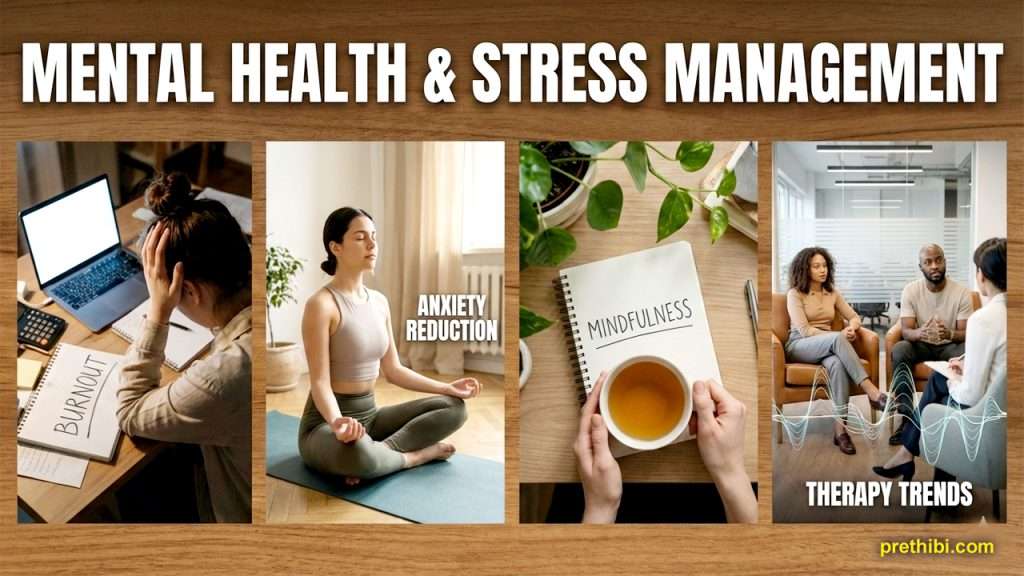
If the last few years taught us anything, it’s that mental health isn’t a niche topic or a private problem — it’s a public-health priority that touches workplaces, families, schools, and communities across the United States. Americans report high levels of work-related stress and burnout, new technologies are reshaping how care is delivered, and evidence-based practices like mindfulness continue to evolve. This post walks through what burnout looks like, proven anxiety-reduction techniques, practical mindfulness tools you can use today, and the therapy and digital-health trends shaping mental-health care in the USA. Along the way you’ll get actionable strategies, resources, and plain-language explanations so you can reduce stress and get help when you need it.
Table of contents
- What is burnout — and how it shows up
- The current landscape: U.S. workplace stress and trends (quick facts)
- Anxiety reduction techniques that actually work
- Mindfulness — evidence, simple practices, and how to make it stick
- Therapy trends in the U.S. (teletherapy, AI, hybrid care, regulation)
- Building a personal stress-management plan (template + week-one checklist)
- When to seek professional help and how to find it
- FAQs
- Resources & references
1) What is burnout — and how it shows up
Burnout is more than feeling tired after a long week. Defined by persistent exhaustion, cynicism or detachment from work, and a reduced sense of personal accomplishment, burnout develops over time and often results from chronic workplace stress that hasn’t been successfully managed. People experiencing burnout commonly describe:
- Emotional exhaustion (feeling drained, depleted)
- Cynical or negative attitudes toward work
- Reduced productivity and a sense of inefficacy
- Physical symptoms like headaches, sleep disruption, or stomach problems
While burnout is often discussed in relation to paid work, caregivers, students, and anyone with chronic role strain can experience it. Recognizing the pattern early — especially the combination of emotional exhaustion plus reduced effectiveness — makes recovery faster and less painful.
Read more- Healthy Aging & Longevity Hacks: Science-Backed Tips for Americans to Live Longer & Stronger
2) The current landscape: U.S. workplace stress and trends (quick facts)
Workplace stress and burnout rates remain high in the U.S., affecting a wide range of industries from healthcare to tech and public service. Major surveys and recent research point to elevated levels of stress and burnout among workers, with many organizations shifting from “perks” to structural wellbeing initiatives. Teletherapy and digital mental-health tools have become mainstream access points, while regulators and lawmakers are beginning to scrutinize AI-driven therapy tools.
(Why this matters: trends in access and technology affect not only how individuals find care but also what employers can offer and what safeguards are in place.)
3) Anxiety reduction techniques that actually work
Anxiety sits on a spectrum — from brief situational worry to persistent disorders that impair function. You don’t need therapy to use techniques that lower daily anxiety, but some people will need professional care. Below are evidence-backed approaches, explained with how to practice them.
3.1 Breathing practices (the simplest high-impact tool)
Why it helps: Slow, controlled breathing switches on the parasympathetic nervous system (the “rest-and-digest” mode), lowering heart rate and shifting your brain away from threat-response patterns.
How to do it (box breathing):
- Inhale quietly for 4 seconds.
- Hold for 4 seconds.
- Exhale slowly for 4 seconds.
- Hold for 4 seconds.
Repeat 4–8 cycles.
Progression: Try 4-6 minutes when anxious; for daily resilience practice once in the morning and once before bed.
3.2 Grounding and sensory techniques
Why: Grounding slows spirals of catastrophic thought by reconnecting you to the present moment using senses.
5-4-3-2-1 method: Name 5 things you can see, 4 you can touch, 3 you can hear, 2 you can smell, 1 you can taste (or a positive memory if taste isn’t available).
3.3 Cognitive techniques (brief CBT tools)
Thought record (2-minute version):
- Identify the anxiety-triggering thought.
- Ask: “What’s the evidence for/against this thought?”
- Re-write the thought with a more balanced alternative.
This trains the brain to notice cognitive distortions (catastrophizing, “all-or-nothing” thinking) and replace them.
3.4 Behavioral approaches: exposure + activity scheduling
For certain anxiety problems (like social anxiety or specific phobias), guided exposure under the support of a clinician is highly effective. For everyday anxiety, scheduling small, enjoyable, mastery-building activities (15–30 minutes/day) improves mood and lowers avoidance patterns.
3.5 Physical health basics — they’re not optional
Regular exercise, consistent sleep, and reduced stimulants (caffeine, nicotine) are foundational. Exercise increases BDNF and endorphins; sleep consolidates emotion regulation; and lower stimulant intake reduces baseline physiological arousal.
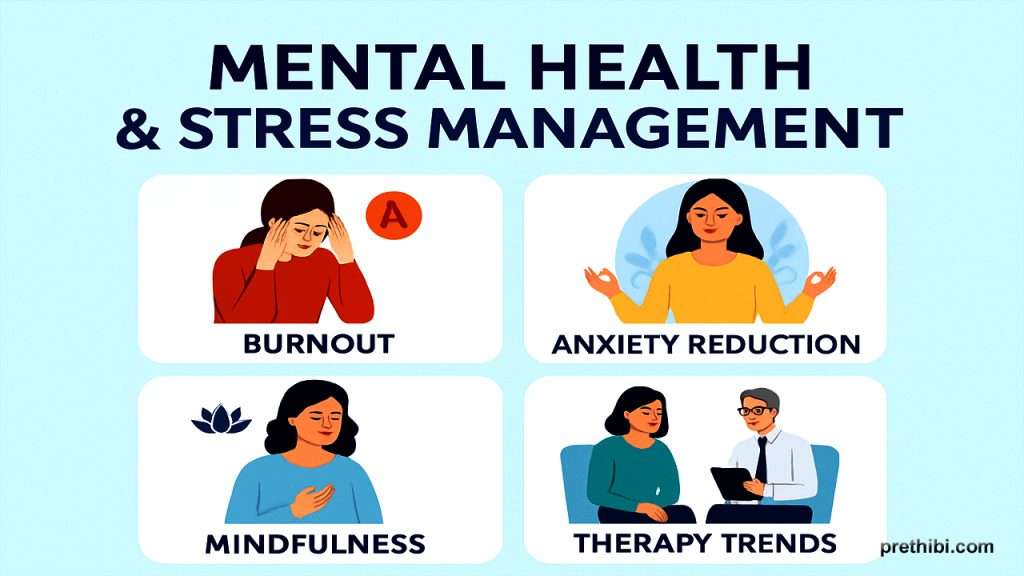
4) Mindfulness — evidence, practical practices, and how to make it stick
What the research says
Mindfulness-based interventions (MBIs), especially Mindfulness-Based Stress Reduction (MBSR), have moderate-to-strong evidence for reducing perceived stress, anxiety, and depressive symptoms across diverse populations. Recent meta-analyses and systematic reviews continue to support MBSR and digital mindfulness programs, although effect sizes vary by population and program delivery. Digital formats can work well but sometimes face engagement challenges compared to in-person programs.
Simple mindfulness practices you can start today
1-minute mindful check-in
- Pause. Feel your feet on the floor. Notice your breath for one minute. Label any emotions (“feeling anxious,” “tired”) and let them be there without acting.
3-minute breathing space
- Notice thoughts and body sensations (1 minute).
- Focus fully on the breath (1 minute).
- Expand awareness to the body, then open to the environment (1 minute).
Everyday mindfulness
- When brushing teeth, commit to noticing the taste, foam, motion for the full time instead of thinking about tomorrow’s to-do list.
Making mindfulness stick
- Start small: 1–5 minutes daily for 4 weeks beats sporadic long sessions.
- Anchor to an existing habit (after your morning coffee, do a 2-minute check-in).
- Use community: group classes or short live sessions increase adherence.
- Combine with therapy if you have a mental-health diagnosis — MBIs are augmentation, not replacement.
5) Therapy trends in the U.S. — what’s changing and what to watch
Mental health care in the U.S. is moving quickly. Here are major trends shaping where people get help, how effective it is, and what to watch for.
5.1 Teletherapy & virtual-first care
Teletherapy exploded during the pandemic and remains widely used. Hybrid models (a mix of video, in-person, and text/phone support) are becoming common, improving access for people in rural areas or with mobility/time constraints. Platforms and employers increasingly offer virtual behavioral-health benefits.
5.2 AI and digital mental-health tools — promise and caution
AI is being applied in several ways: chatbots for immediate support, algorithms to personalize treatment recommendations, and tools that help clinicians track symptoms. While AI can increase access and reduce wait times, researchers and lawmakers are raising safety and ethical concerns, prompting regulatory action in some states. Some U.S. jurisdictions are exploring limits on purely AI-driven therapy without licensed oversight due to risks around inaccurate or harmful responses. If you use chatbot-based services, treat them as interim support — not a replacement for licensed care.
5.3 Behavioral-health integration and workplace mental health
More primary-care settings and employers are embedding behavioral health within routine care. Employers have shifted from “wellness perks” (foosball tables, snacks) to structural supports: flexible schedules, paid mental-health days, and coverage for evidence-based therapies. This shift recognizes that systemic workplace factors (workload, control, fairness) drive burnout and that individual interventions alone aren’t enough.
5.4 Digital therapeutic markets & access challenges
The market for mental-health technology is growing rapidly, with investments in apps, remote monitoring, and personalized digital therapeutics. Yet access remains uneven: provider shortages, insurance coverage variability, and engagement drop-off in app users are persistent issues. High-quality care still depends on appropriately trained clinicians and systems that combine digital tools with human oversight.
Must read- The Rise of Agentic AI in the USA: How Autonomous AI Agents Are Transforming Work, Productivity & Innovation
6) Build your personal stress-management plan (practical template)
Below is a compact, practical plan you can implement in one week. Save it, adapt it, and review monthly.
Week-one starter plan (daily micro-habits + weekly actions)
Daily (10–30 minutes total)
- Morning (5 min): 1-minute mindful check-in + set 3 priorities (not tasks — priorities).
- Midday (5–10 min): Walk or movement break + box breathing (4 cycles).
- Evening (5–10 min): Gratitude list (3 things) + digital curfew 60 minutes before bed.
Weekly
- Pick one avoidance behavior (e.g., skipping hard conversations). Break it into a 3-step exposure for the week.
- Social: Schedule a 30-minute connection (coffee, call). Social support is a strong buffer against stress.
- Recovery: One 2-hour block of “no-work” time — treat it like a professional appointment.
Monthly check
- Rate burnout/energy on a 1–10 scale. If your score worsens for three weeks, escalate: consult with a clinician and adjust workload.
When work is the main driver
- Use the “control checklist”: Which tasks can you delegate? Which tasks can be paused? Which tasks align with your strengths? Share findings with your manager and ask for one small change (timeline, resource, or role clarity).
7) When to seek professional help and how to find it
Signs you should speak with a clinician
- Persistent suicidal thoughts or self-harm ideation (seek immediate help or crisis services).
- Symptoms that interfere with work, relationships, or self-care for more than two weeks.
- Panic attacks, severe insomnia, or rapid declines in functioning.
- Substance use to cope with stress.
Finding care in the U.S.
- Employer or university Employee Assistance Programs (EAPs) — quick, often low/no-cost start.
- Insurance portals — check in-network mental-health providers.
- Teletherapy platforms — faster matches but check licensure and reviews.
- Community mental-health centers — income-based options in many cities.
- Crisis lines: 988 (U.S. lifeline) for immediate support.
When choosing a therapist, look for:
- A licensed professional (LCSW, LPC, LMFT, PhD, PsyD)
- Experience with your main concern (panic disorder, burnout, trauma)
- Fit — rapport is one of the strongest predictors of good outcomes
8) FAQs
Q: Can mindfulness replace therapy?
A: For some people with mild stress or situational anxiety, mindfulness can be a powerful tool. For diagnosed anxiety disorders, PTSD, or severe depression, mindfulness is best used alongside evidence-based therapy (CBT, EMDR, medication when indicated).
Q: Are mental-health apps useful?
A: They can be — especially for monitoring, guided practice, and early support — but engagement drops over time. Apps with clinician integration and proven clinical data are more reliable. If you’re using an app, combine it with human support for the best outcomes.
Q: Is burnout a medical diagnosis?
A: Burnout itself is not a psychiatric diagnosis in the DSM, but it is recognized as an occupational phenomenon by the World Health Organization and is associated with medical and psychiatric consequences that may require care.
Q: Are AI chatbots safe for mental-health support?
A: Chatbots can provide immediate, anonymous support and coping tips, but regulators have warned about risks. Several U.S. states and entities are scrutinizing or limiting AI in clinical therapy contexts; use chatbots cautiously and seek licensed care for ongoing or severe issues.
9) Quick reference: evidence & resources (short reading list)
- Recent review of digital mental health and AI implications (research overview).
- Systematic reviews/meta-analyses on MBSR and mindfulness effectiveness.
- APA/CDC workplace stress and burnout reports. Reporting and analysis of telehealth/teletherapy trends in 2026.
Final practical tips (carry these with you)
- Small wins matter: If you can’t overhaul your schedule, pick one 5-minute habit and do it consistently.
- Boundary practice: Saying “not right now” or “I need help” is a healthy skill — practice with low-stakes situations.
- Track sleep and mood: A simple diary helps clinicians tailor care and helps you notice patterns.
- Use community resources: Peer groups, support lines, and workplace EAPs are often underused — try them.
- Be skeptical of quick fixes: Supplements, viral “hacks,” and AI-only solutions sound appealing; evidence and safety matter.